


Depression-era devastation?
ONE of the Mid North’s most respected farmers says the current fuel and fertiliser crisis could result in industry consequences unseen since the Great Depression.

ONE of the Mid North’s most respected farmers says the current fuel and fertiliser crisis could result in industry consequences unseen since the Great Depression.
South Australian grain producers are approaching the sowing of new crops with the pressure of high costs, and supply concerns, surrounding fuel and fertiliser, caused by the Iran War.
Mallala-based farmer, and well-known industry figure, John Lush – who last year received an Order of Australia for his contributions to the grain industry, said
“It’s not just fuel, it’s fertiliser and lots of other things,” Mr Lush said.
“All our costs are going through the roof. The cost of urea and other fertilisers has doubled in the last few weeks, and the price of diesel is ridiculous, if you can get it.
“This is the first time in my life I’ve thought we’ve got enough diesel to sow the crop, but will we have enough to harvest the crop? There’s so many unknowns at the moment.
“There’s more unknowns about this coming year since I’ve seen in my farming career.”
Mr Lush said being unable to properly fertilise crops would result in decreased overall yields.
“We’re going to have reduced yields this year, because I know we won’t be able to get enough urea to do the whole spreading program on our wheat and canola,” he said.
“Without adequate nitrogen, your crop yields reduce quite dramatically.
“We’ve got some urea on farm, and we were hoping to get another lot later in the year to finish the program, and I don’t think we’ll be able to get it. It’s not just price, I don’t think it will be available."
Mr Lush said unless best-case scenario yields were achieved, the current financial pressures would mean growing wheat was financially unsustainable.
“With the current price of wheat, I don’t think we can actually grow a wheat crop and make money out of it,” he said.
“With the costs of fuel, fertiliser and urea… in my area we would have to harvest a six-tonne crop to make any money.
“A six-tonne crop is doable in a really good year. In an average year we’ll probably average five tonne, and in a below average year it would be three or four.”
Mr Lush said farmers had avoided such difficult financial circumstances since the Great Depression.
“There’s some serious decisions to be made about cropping programs this year,” he said.
“I remember my father telling me that during the Great Depression, farmers in his area sowed wheat, grew a good crop and grew money.
“For the first time since that Great Depression, we might be in that situation this year. I never though I would see that, but that’s possible this year.”
Mr Lush said ensuring primary production could operate with sustainable energy costs needed to be a higher government priority.
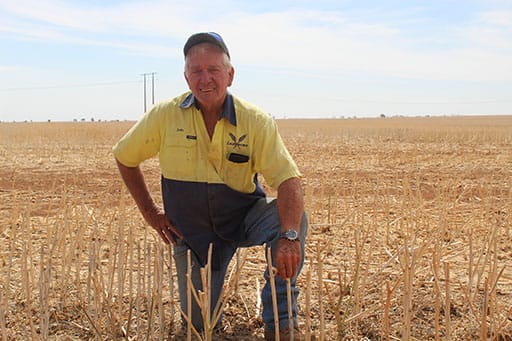
“We’ve got all the resources in the world, and we’re not using them ourselves,” he said.
“We’re exporting to other parts of the world, but we’re not using our nuclear, coal or gas potential to give our population cheap, sustainable energy.
“Growers across Australia would all be saying the same thing… the government decisions we see being made are ridiculous.”
Mr Lush expected the cost and supply pressures surrounding fuel and fertiliser to extend throughout the year.
“I don’t see the costs coming down in the short term,” he said.
“This fuel crisis is not going to go away overnight. Even if the war in Iran was to end tomorrow, we’re going to have a recovery period of months, if not longer.
“If it recovered by harvest time I would be surprised.”
However, Mr Lush said the lasting effects of rainfall early in the year would benefit the sowing if the upcoming crop.
“We’ve got a bit of moisture in the ground and there’s a bit of green around,” he said.
“We’ve had to spray all our cropping country once to take the germination out.
“We’re looking better than we have the last couple years, where we’ve sowed all our crop dry before we got any rain. If we get follow-up rain it will look alright.”


