


Growing more than grass: The Turf Farm’s customer-first success in the Mallee
WHAT began as a survival decision during some of the toughest drought years in South Australia has grown into one of the state’s leading turf businesses, with success largely attributed to the company’s customer-focused philosophy.

BY BRIDGET O’DRISCOLL
WHAT began as a survival decision during some of the toughest drought years in South Australia has grown into one of the state’s leading turf businesses, with success largely attributed to the company’s customer-focused philosophy.
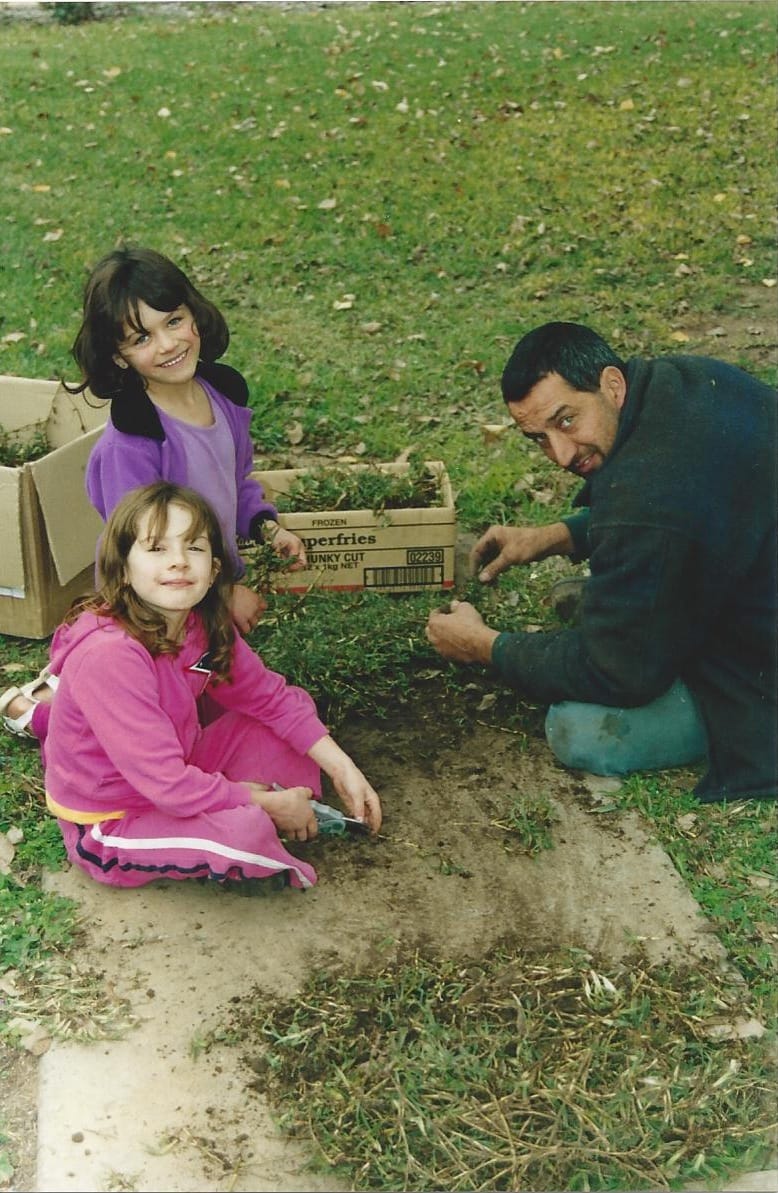
At The Turf Farm, in Pinnaroo, Paul and Tracey Daniel, alongside their daughter Chloe Hardie, have spent more than two decades transforming a modest diversification venture into a premium, service-driven enterprise supplying turf across South Australia.
“In the 90s we had nine or 10 years of drought, and we were early in farming. We couldn’t see a future,” Tracey said.
“We were living on government money because we weren’t getting an income from the farm… and thought if we were going to stay on the farm, we would have to diversify.”
After exploring everything from ostriches to aquaculture, the Daniels landed on turf.
“Paul was very keen on his lawns… so we explored that and thought, yep, we can do that. At that point it was just diversification. We didn’t know it was going to be where it is today.”
Early years tested their resolve. Tracey admits the first seven years failed to turn a profit, with constant pressure to walk away.
“Our accountant kept saying to just stick with it, you’re going to turn a corner, and we did,” she said.
A major turning point came in 2012, when the business shifted direction away from wholesale and towards a customer-focused model.
“We completely reinvented our business… into retail, logistics, sales through to aftercare and everything. So 100 per cent new customers,” she said.
“We’ve really built a household name… with trades and homeowners, and we like that you can build that relationship and have that ongoing connection,” Tracey said.
“You learn what their dog’s name is, and their kids’ names… we make friends for life.”
That philosophy extends beyond the point of sale, with customers having an ongoing relationship for the life of their lawn.
“When someone buys turf, they get a follow up email a year later saying, ‘It’s been one year, how’s it going?’ and people do send you photos,” she said.
“They might be a one-off customer, but they’re not… they’ll go on to buy for their kids, or another home. That person becomes a customer for life.”
The Turf Farm have built their model on value for the customer, rather than competing for the lowest price.
“We’ve never sold budget lawn… we’ve always sold a premium product,” Tracey said.
“You can’t provide good service on a budget price, so the customer pays a bit more and they get more.”
That commitment includes a specialised delivery system, tailored logistics, and life-time aftercare support, which are all designed to be a point of difference for the business in a competitive market.
“We sell lawn all year round five days a week, 50 weeks of the year, what changes is the volume of lawn leaving each day,” Tracey said.
“We’ve grown every year except for one… whether that’s been 5, 7, 10, or 20 per cent.”
For Chloe Hardie, who now plays a key role in operations, the success of the business means overcoming the challenges of running a company in the remoteness of their Mallee farm.
“Doing business in Pinnaroo… there is long distances for meetings, and our customer base is not local,” she said.
“When you’ve got to move lawn three to 12 hours away… just the distance is a challenge.
“You grow a living product, every year and every season is different.
“Climactically it’s very challenging… the last two years have been some of the worst we’ve had, it’s so dry.”
In an arid landscape and a low rainfall zone, water is a critical constraint.
“Buying water is a big one… we need water, which is probably our limiting factor,” Tracey said.
To manage this, the business has invested heavily in efficiency, from automated irrigation systems to careful monitoring and crop selection.
“You only have so much allocation… so we monitor and keep really good records,” Tracey said.
“We water at night… the irrigators have long tubes so there’s less evaporation.”
The team has also adapted its product offering, prioritising drought-tolerant varieties such as TifTuf, which Chloe said quickly proved its market appeal.
“We put it on the market and it sold out in six weeks… and this happened for around three years,” she said.
“It took us until 2022 to have that consistent 12 months of supply.”
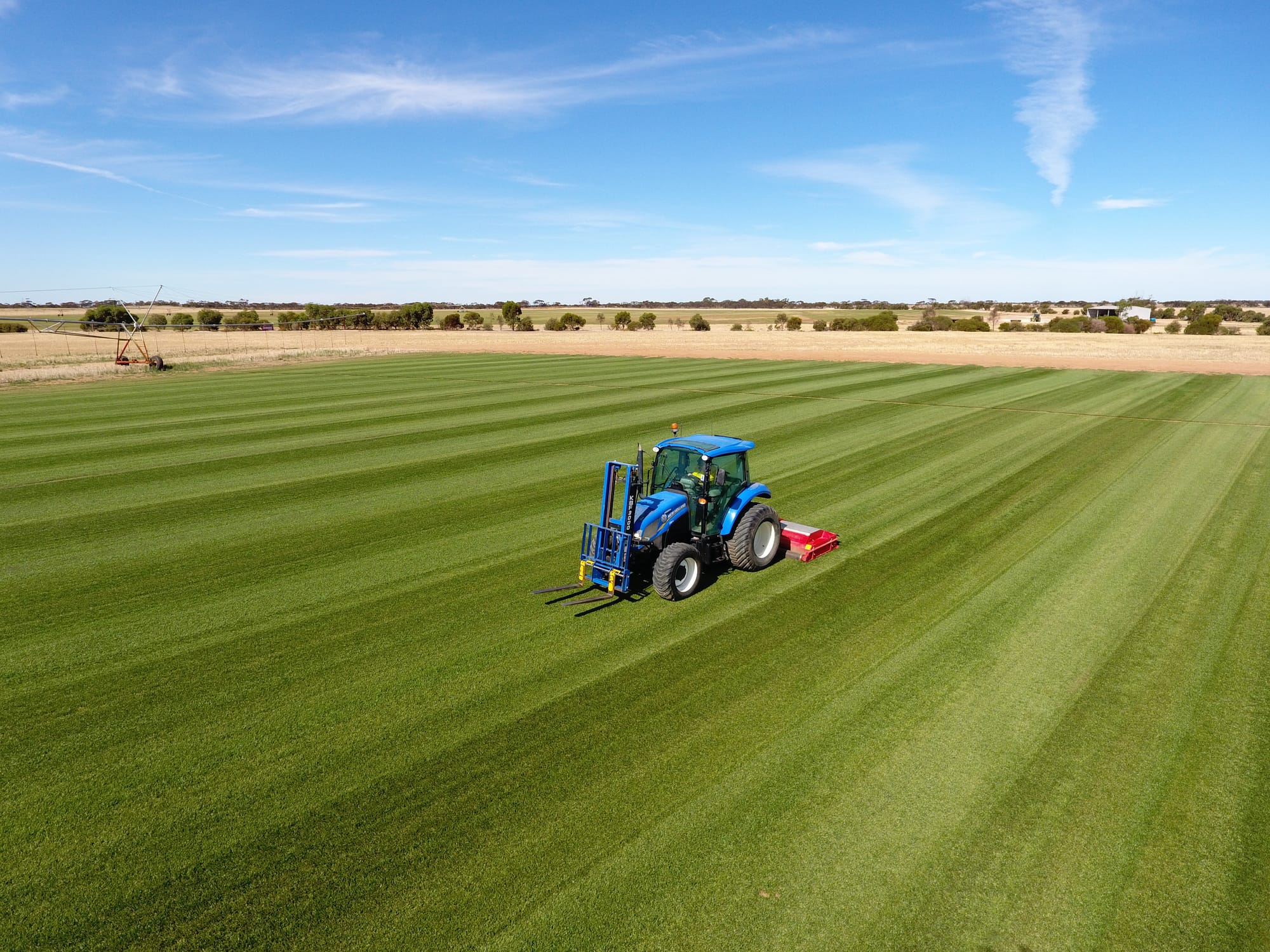
Producing turf in the Mallee is an intensive process, requiring constant attention to detail.
“During the growing season we fertilise every two weeks… we mow every day, five days a week, and we water every day,” Chloe said.
“We are pushing the plant to its capacity because we want it to be the strongest it can be.”
Behind the scenes, innovation has played a major role, from early second-hand equipment to automated harvesters and irrigation controlled by smartphone.
“It’s gone from this very basic thing to lots of automation… and now we are looking at robotic mowing,” Tracey said.
But despite the technology, she believes the real strength of the business lies in its people, both staff and customers.
“Teams are critical infrastructure… without a team you don’t have a business,” she said.
“We have a core team of 14 people all year round, in areas such as production, sales, administration, marketing, logistics and management and then during the active busy growing seasons we scale up to around 17,” Tracey said.
With the next generation stepping up, the future looks secure.
“Chloe is amazing at operating it… she is definitely the future CEO of the company,” Tracey said.
The Turf Farm has shown that persistence and adaptation make for success, while a passion for providing a quintessential part of the Aussie dream keeps them doing what they do.
“Selling lawn is about helping people feel good about where they live, work and play,” Tracey said.


