


Gamechanger? Riverland beekeeper backs research for pollen substitues
SOUTH Australia’s beekeeping and pollination industry are closely watching a new research into artificial honey bee diets, as drought pressure, nutrition gaps and the looming spread of varroa reshape hive management across the state.

SOUTH Australia’s beekeeping and pollination industry are closely watching a new research into artificial honey bee diets, as drought pressure, nutrition gaps and the looming spread of varroa reshape hive management across the state.
AgriFutures Australia has called for work to investigate the role of plant sterols in developing artificial honey bee diets, with the research aimed at improving long-term hive nutrition and resilience under commercial pollination systems.
Riverland beekeeper Ian Cass said, “finding effective pollen replacement is a serious issue for many beekeepers, especially in drought conditions, like we had over the last few years in the Riverland.”
“Bees like humans need a balanced diet of nectar, for honey and pollen for combining with the honey to make bee bread which is what bees feed their young babies in the comb before they cap the brood and it stays there until it emerges as a full bee,” he said.
“Different trees or plants supply either nectar or pollen or some supply both.”
Mr Cass said that almonds are a perfect example of a good pollen producer, which deliver good quality pollen but often very little nectar.
“That is why beekeepers take bees into the almonds, usually with some honey supplies in the hive, to help them balance the extra pollen, so the hive can build up ready for their big spring and summer season,” he said.
Mr Cass also said seasonal breeding cycles also shaped hive strength, explaining, “bee breeding is affected by the length of the days and as such in late June are at their lowest ebb (late December at their peak numbers) and then in July they start to build numbers in the hive.”
“The other big factor determining bee numbers is food supply of both nectar and pollen,” he said.
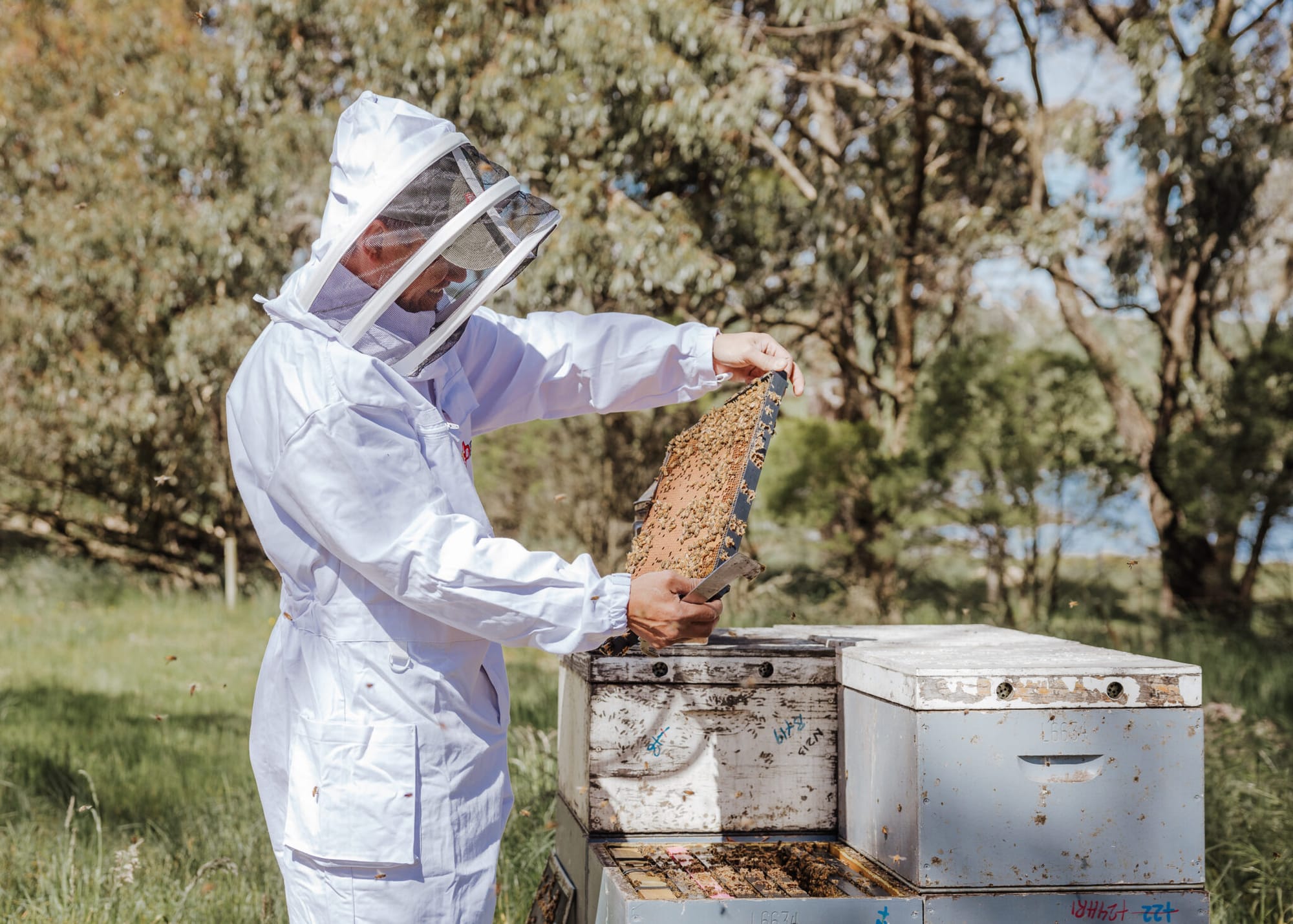
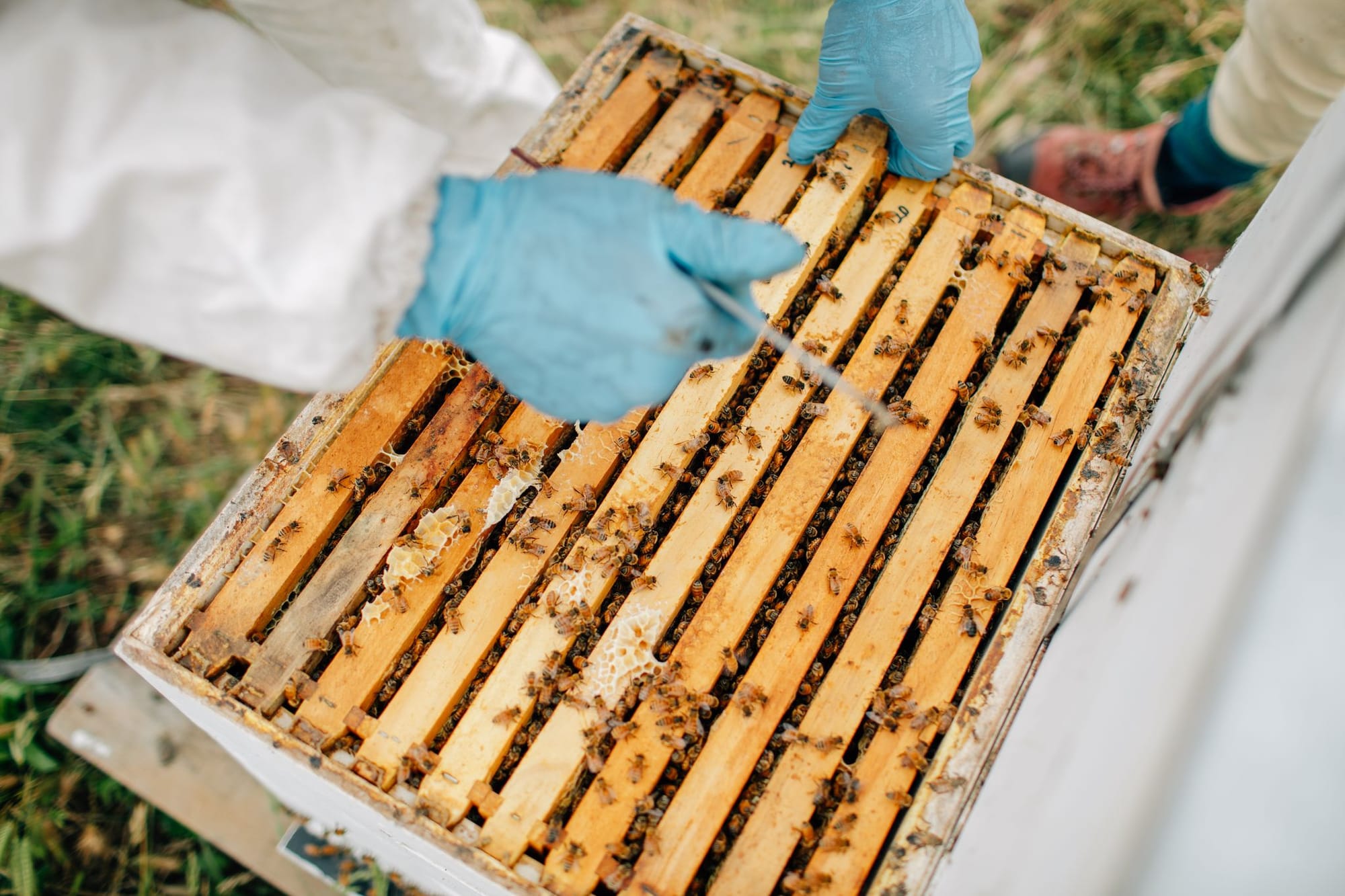
Looking ahead to South Australia’s almond pollination season, Mr Cass warned that Varroa will become a major issue in South Australia this coming almond pollination season. PHOTOS: AgriFutures Australia
Mr Cass mentioned autumn remains as one of the toughest periods nutritionally, “during autumn in South Australia, pollen is the hardest thing to find”.
“Often there is nectar, but good quality pollen is an issue for bees, as many of the plants and trees flowering in Autumn are lacking high quality pollen,” he said.
Speaking about drought feeding strategies, Mr Cass said, “Beekeepers can supplement nectar with sugar water in times of drought, which is white sugar, at either 1-1 or 2 parts sugar to 1 water, and then mixed together.”
Mr Cass spoke about the difficulty of finding a suitable pollen substitute.
“Pollen substitution is a more difficult issue as it needs to be high protein and with all the necessary vitamin additives to make it a balanced feed,” he said.
“There are commercially available pollen substitutes now, but they are not cheap and can’t be used for too long a period.”
Mr Cass supported the idea of any new research focused on long-term pollen substitutes.
“Any research into making better, longer term pollen substitutes, which are cost effective, will be very much appreciated by beekeepers, as it gives us opportunities to supplement bees and build them up under drought conditions ready for pollination.”
Mr Cass spoke about the current broader pressures the industry is facing, saying, “strong bee hives are vitally important, as with the danger of varroa (also the resistance to varroa chemical treatments issues now becoming very serious), which will weaken our bees, and climatic conditions and fuel prices are all combining to make bee keeping a very different industry than it was 5 years ago, and we are seeing many talking of exiting the industry.”
Looking ahead to South Australia’s almond pollination season, Mr Cass warned, “given that varroa will almost certainly become a major issue in South Australia this coming almond pollination season, as the tens of thousands of hives of bees are moved to the almonds for pollination, varroa will get spread to most colonies which are free of varroa now”.
“This will also spread varroa to the wild populations of bees in the Riverland, and throughout the State, when the hives go back to their regions or home areas, and then get moved to other pollination contract areas, or honey production, over the spring and summer.”
Agricultural production is bound to have a major shift according to Mr Cass.
“Varroa will change the face of agricultural production, in ways many don’t realise yet,” he said.
“Many producers are getting their bee pollination done by wild hives living in the environment, but once varroa becomes endemic (1 to 5 years), 90 to 95 per cent of wild hives will be wiped out by varroa infestations, and there will be a serious shortage of bees for even home pollination.”
Looking ahead, Mr Cass said, “I, personally, feel sad to be painting such a grim picture of the Bee Industry, but unfortunately this is what we are facing at present”.
“There are a lot of very serious changes coming at us like a freight train, and we have to adapt to the new bee world we are heading into,” Mr Cass said.
For growers reliant on almonds, horticulture and other pollination-dependent systems, the AgriFutures work is likely to be watched closely as the sector looks for practical ways to strengthen hive nutrition ahead of increasingly volatile seasons.
For more information on AgriFutures “Request For Quote: Investigate the role of plant sterols in developing artificial honey bee diets” program, visit the website (www.agrifutures.com.au/funding-opportunity/request-for-quote-investigate-the-role-of-plant-sterols-in-developing-artificial-honey-bee-diets).


